Musical Settings (XVII): “Hometown Beyond the White Clouds” 白雲故鄉

This entry is part 39 of 39 in the series Chinese Art Song

“Hometown Beyond the White Clouds” 白雲故鄉,
words by Wei Hanzhang 韋瀚章

海風翻起白浪,
[hai3 feng1 fan1 qi3 bai2 lang4]
ㄏㄞˇ ㄈㄥˉ ㄈㄢˉ ㄑㄧˇ ㄅㄞˊ ㄌㄤˋ
Sea winds stir up white waves;

浪花濺濕衣裳。
[lang4 hua1 jian4 shi1 yi1 shang5]
ㄌㄤˋ ㄏㄨㄚˉ ㄐㄧㄢˋ ㄕˉ ㄧˉ ㄕㄤ˙
Splashing waves wet my clothes.

寂寞的沙灘,
[ji2 muo4 di5 sha1 tan1]
ㄐㄧˊ ㄇㄛˋ ㄉㄧ˙ ㄕㄚˉ ㄊㄢˉ
On the lonely sandy beaches,

只有我在凝望。
[zhi3 you3 wo3 zai4 ning2 wang4]
ㄓˇ ㄧㄡˇ ㄨㄛˇ ㄗㄞˋ ㄋㄧㄥˊ ㄨㄤˋ
Only I stand gazing.

群山浮在海上,
[qun2 shan1 fu2 zai4 hai3 shang4]
ㄑㄩㄣˊ ㄕㄢˉ ㄈㄨˊ ㄗㄞˋ ㄏㄞˇ ㄕㄤˋ
Mountains float above the ocean;

白雲躲在山旁。
[bai2 yun2 duo3 zai4 shan1 pang2]
ㄅㄞˊ ㄩㄣˊ ㄉㄨㄛˇ ㄗㄞˋ ㄕㄢˉ ㄆㄤˊ
White clouds hide behind the mountains.

層雲的後面,
[ceng2 yun2 di5 hou4 mian4]
ㄘㄥˊ ㄩㄣˊ ㄉㄧ˙ ㄏㄡˋ ㄇㄧㄢˋ
Right behind layers of clouds,

便是我的故鄉。
[bian4 shi4 wo3 di5 gu4 xiang1]
ㄅㄧㄢˋ ㄕˋ ㄨㄛˇ ㄉㄧ˙ ㄍㄨˋ ㄒㄧㄤˉ
Is my hometown.

     **********

海水茫茫,
[hai3 shui3 mang2 mang2]
ㄏㄞˇ ㄕㄨㄟˇ ㄇㄤˊ ㄇㄤˊ
Boundless ocean,

山色蒼蒼,
[shan1 se4 cang1 cang1]
ㄕㄢˉ ㄙㄜˋ ㄘㄤˉ ㄘㄤˉ
Luxuriant mountains,

白雲依戀在群山的懷裡,
[bai2 yun2 yi1 lian4 zai4 qun2 shan1 di5 huai2 li3]
ㄅㄞˊ ㄩㄣˊ ㄧˉ ㄌㄧㄢˋ ㄗㄞˋ ㄑㄩㄣˊ ㄕㄢˉ ㄉㄧ˙ ㄏㄨㄞˊ ㄌㄧˇ
White clouds still cling to mountains,

我卻望不見故鄉。
[wo3 que4 wan4 bu2 jian4 gu4 xiang1]
ㄨㄛˇ ㄑㄩㄝˋ ㄨㄤˋ ㄅㄨˊ ㄐㄧㄢˋ ㄍㄨˋ ㄒㄧㄤˉ
I, on the other hand, cannot see my hometown.

血沸胸膛,
[xie3 fei4 xiong1 tan2]
ㄒㄧㄝˇ ㄈㄟˋ ㄒㄩㄥˉ ㄊㄤˊ
Blood boiling in my chest,

仇恨難忘,
[chou2 hen4 nan2 wang4]
ㄔㄡˊ ㄏㄣˋ ㄋㄢˊ ㄨㄤˋ
With inextinguishable abomination,

把堅決的信念築成壁壘。
[ba3 jian1 jue2 di5 xin4 nian4 zhu2 cheng2 bi4 lei3]
ㄅㄚˇㄐㄧㄢˉ ㄐㄩㄝˊ ㄉㄧ˙ㄒㄧㄣˋ ㄋㄧㄢˋ ㄓㄨˊ ㄔㄥˊ ㄅㄧˋ ㄌㄟˇ
Build fortresses with our unbending faith.

莫讓人侵佔故鄉。
[muo4 rang4 ren2 qin1 zhan4 gu4 xiang1]
ㄇㄛˋ ㄖㄤˋ ㄖㄣˊ ㄑㄧㄣˉ ㄓㄢˋ ㄍㄨˋ ㄒㄧㄤˉ
Do not allow our enemies to invade our hometown.

__“Hometown Beyond the White Clouds”

Unlike many other patriotic songs of the war era, Baiyun guxiang 白雲故鄉 (1938) was written in Hong Kong, officially a colony of the Great Britain. The lyricist Wei Hanzhang 韋瀚章 and the composer Lin Shengxi 林聲翕, both natives of Guangdong Province, were active professionally in Shanghai in the 1930s. As the Sino-Japanese war broke out, they retreated to Hong Kong. When standing at the beach of Repulse Bay 淺水灣[1] overlooking the misty mountains in the distance, Wei put down the nostalgic verses and asked his younger colleague to set them to music.

__Hong Kong during the Sino-Japanese Conflicts

After overtaking the Northeast, Shanghai and Nanjing, Japanese Imperial Army continued their operations southward, seizing coastal areas and ports. Guangzhou 廣州, the capital of Guangdong 廣東省 and the south most major port of China, became a crucial entry point for commercial goods and military supplies. In 1936, the eve of the Sino-Japanese war, Yuehan Railway 奧漢鐵路, connecting Guangzhou in the south and Hankou, Hubei 漢口, 湖北 in Central China, was completed after decades of delays.[2] Via Jinghan Railway 京漢鐵路 on the other side of Yangtze River, it further reached Beijing in Northern China.[3] Hong Kong, immediately south of Guangzhou, and under British control, provided the inland Chinese defense forces with access to international information and support.

To cut off this lifeline, Japanese Headquarters began an aggressive military campaign named “Canton Operation” in October of 1938. Despite the great efforts of local forces, Guangzhou and the Pearl River Delta fell into the Japanese hands within weeks.[4] Hong Kong became isolated from the mainland and surrounded by Japanese forces. As a colony of the UK and sheltered by international influences, it remained a safe ground for many refugees from mainland for some time.

Both the United Kingdom and the Empire of Japan were signatories of post-World War I international naval treaties such as the Washington Naval Treaty, signed by the Allies of WWI in 1922, and the subsequent London Naval Treaty, signed in 1930.[5] As the global tensions escalated in the 1930s, British officials began enhancing the defense structure and bringing in reinforcement troops to Hong Kong. In early 1936, as part of the British arms expansion program, a five-hundred-million-pound budget was allocated for Hong Kong. Unfortunately, the execution of the expansion was prioritized for the home territory and delayed in the colony.

After the expiration of the London Naval Treaty, Japan began strategizing wars against the British and the Americans. Internal strategic differences between Japanese administrative and military leaders delayed the actions for several years. On December 7, 1941, Japanese navy attacked US Naval Base at Pearl Harbor and, a few hours later, Hong Kong. After weeks of intense combat, Mark Aitchison Young, the Governor of Hong Kong, surrendered on Christmas Day to avoid further bloodshed.[6] Japanese occupied Hong Kong until August of 1945.[7]

__Wei Hanzhang 韋瀚章 (1906-1993)

Wei Hanzhang, courtesy name Haoru 浩如, was from Xiangshan County 香山縣 (today’s Juhai City 珠海市) of Guangdong Province. [8] He began learning phonology and versification with Wu Xinglian吳醒濂 at an early age. While attending Nanyang Business High School in Shanghai 上海南洋甲種商業高中, he studied Chinese literature with Wang Zizhen 王子楨. In 1924, he entered Hujiang University 滬江大學,[9] mentored by Lin Chaohan 林朝翰, a scholar of the Qing-Dynasty Hanlin Academy 瀚林院,[10] laying the groundwork for his poetical achievements. Upon his graduation in 1929, he was appointed the Registrar of the National Conservatory of Music, where he befriended composer Huang Zi 黃自 and likely became familiar with Huang’s student Lin Shengxi 林聲翕.

Wei collaborated with Huang on “Kàngdí ge” (抗敵歌 Song of Resisting the Enemies), one of the earliest patriotic wartime songs, soon after 9-1-8 Incident. In 1932, they co-created “Qi zheng piāo piāo” (旗正飄飄, The Flags Are Billowing), another patriotic work, andthe art song Xiang (思鄉, Thinking of Home). These works led to Wei Hanzhang’s lifetime devotion to lyric writing. Among his highest achievements was the ten-part cantata Chang hen ge (長恨歌, Song of Perpetual Longing).[11] Inspired by the Yuefu 樂府of the same title by Bai Juyi 白居易 (722-846), Chang hen ge opens with the sublime love affair between Emperor Xuanzong of the Tang Dynasty 唐玄宗 and Yang Yuhuan 楊玉環.[12] The middle movements depict the political and military turbulences which lead to the unavoidable tragic ending. Wei’s exquisite lyrics demonstrate his command of traditional versification and his extraordinary ability to match the linguistic rhythm and dramatic movements.

In 1936, soon after leaving the National Conservatory for an employment in Nanjing, Wei became seriously ill and was transferred to Hong Kong for treatments. After convalescence, he worked for Hong Kong Commercial Press 香港商務印書館.[13] As the company began organizing a choir, he recommended Lin Shengxi to lead the group.

In Lin, Wei found a kindred spirit. In 1938, Wei handed freshly written verses Baiyun guxiang to Lin to set to music. As a creative team, they went on collaborating on art songs, film music, choral pieces, and large-scale works. They were both committed to the development of music education in Hong Kong. In the 1950s, they served on the faculty of the China School of (Christian) Sacred Music 基督教中國聖樂院—today’s Hong Kong Music Institute 香港音樂專科學校[14]. Wei taught Chinese poetry and Lin, music theory and history.

During the Second World War, Wei and his wife found sanctuary in Fanyu 番禺, outside of Guangzhou. From 1946 to 1949, he returned to Shanghai and held administrative position at Hujiang University. Based in Hong Kong in his later years, he also brought his knowledge and work to other regions of Southeastern Asia. In 1959, he joined the Borneo Literature Bureau 沙勞越文化出版局, set up by the Crown Colony of Sarawak in Kuching 古晉, handling editing and publications of Chinese book.[15] He remained in Kuching until 1970 and continued to promote cultural education among the Chinese diaspora. His contributions were celebrated widely among Chinese-spoken populations.

__Lin Shengxi 林聲翕 (1914-1991)

Lin Shengxi was born in Xinhui 新會, Guangdong. He attended Guangzhou Music Conservatory in 1931, studying piano with Huang Wancheng 黃晚成. In the following years, he entered the National Conservatory in Shanghai, majoring in piano. While there, he studied harmony with Xiao Youmei 蕭友梅 and composition with Huang Zi.

He returned to Guangzhou in 1935 after graduation. In 1936, he was employed by Columbia Records in Hong Kong[16] as a composer and arranger and appointed as the director of the Commercial Press Chorus. After the Japanese occupation of Hong Kong, Lin went to Chongqing, the wartime capital. In 1942, he assumed the directorship of the Symphony Orchestra of China 中華交響樂團, a governmental sponsored group.[17] After the war, the orchestra moved to Nanjing and continued performing until 1949 when CCP took over the city. After 1950, Lin resided permanently in Hong Kong. As a composer, music educator, publisher and leader of various music groups, he became one of the most influential musicians of the late twentieth century in Hong Kong.

Huang Zi and Wei Hanzhang began working on Chang hen ge in 1931. While most of choral sections were completed and performed in the 1930s, by the time of Huang’s death in 1938, three solo parts—movements four, seven and nine—were unfinished. His student Chen Tianhe 陳田鶴 brought the manuscript to safety after the fall of Shanghai. In 1972, Lin Shengxi set the remaining sections to music and completed the entire work.

In 1981, Wei and Lin co-created on a three-act opera Yìshui song bié (易水送別, Farewell by the Yì River).[18] Based on the historical story of Jing Ke’s 荊軻 assassination of King Zheng 秦王政, who later became the emperor of the Qin Dynasty,[19] the work was written for the Hong Kong Chinese Orchestra, a large ensemble of Chinese instruments.[20] Under the sponsorship of the Urban Council, it premiered on December 23, 1981, at the City Hall, followed by three more performances. This opera marked the final large-scale collaboration between the librettist and the composer.

__Baiyun guxiang

The lyrics of Baiyun guxiang are simple, elegant and emotional. Images of a deserted beach mirrored the desolation of the author displaced from his hometown. His grief turned into resolutions to defeat the enemies.

Poetically, Baiyun guxiang consists of four stanzas. The first two stanzas each has four lines with word counts 6-6-5-6. The third lines end on “-an,” while the others rhyme on “-ang.” Stanzas three and four make up of five lines with word counts 4-4-10-7-7. The longest lines are unrhymed vernacular verses. All other lines rhyme on “-ang,” as in the first two stanzas.

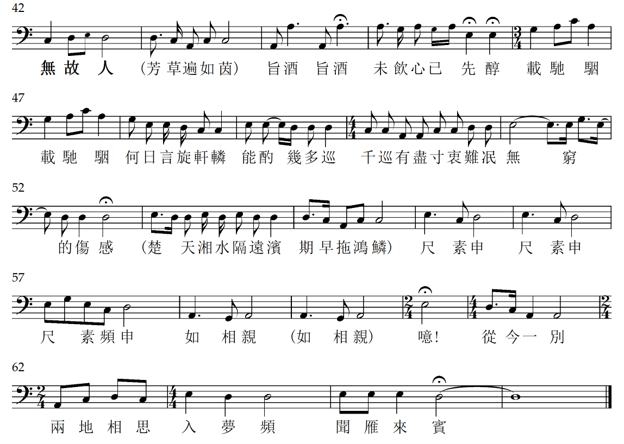
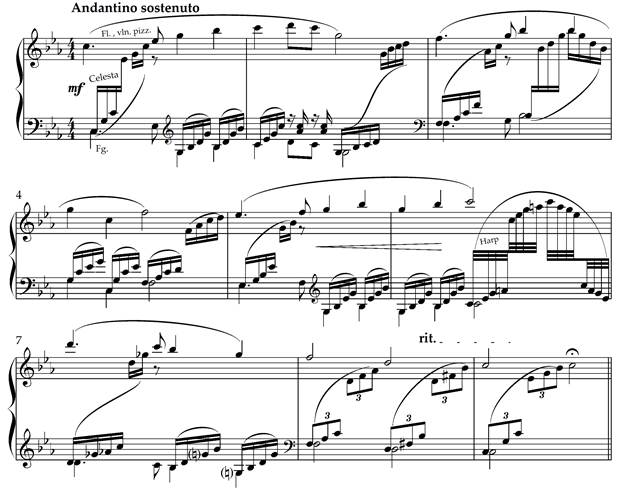
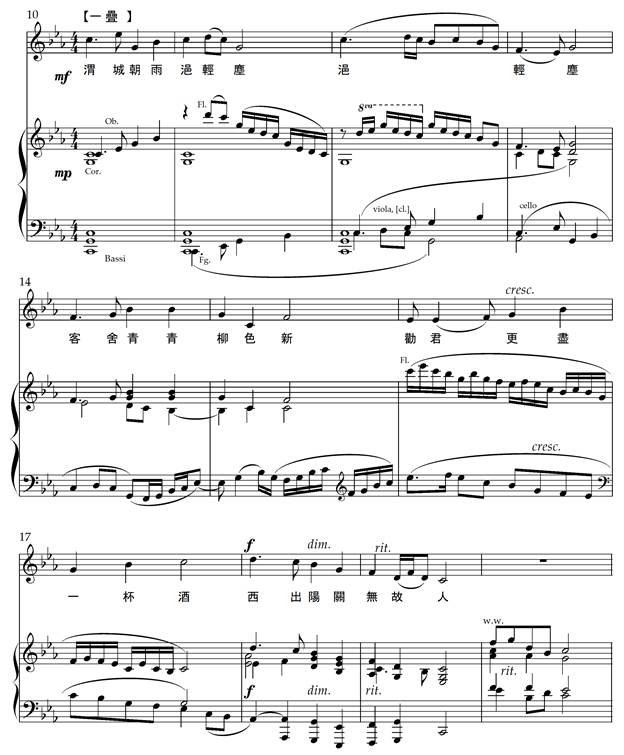
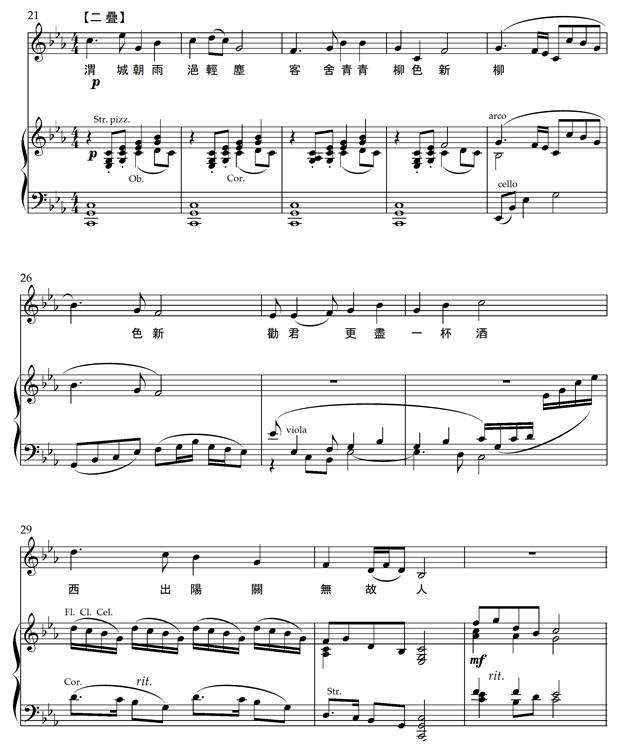
Musically, the song can be divided into two major sections parallel to the verse structure. The first section is lyrical with steady and simple accompaniments. The shorter verses in the second section, accompanied by repeating chords, energize the musical momentum.

Shortly after the completion of Baiyun guxiang, it was recorded by Columbia Records. It was circulated first in Hong Kong, and soon in mainland China. It was included in Chinese Music Classics of the 20th Century 二十世紀華人音樂經典 of 1993.


[1] Repulse_Bay_Beach_Wiki
[2] Guangzhou_Hankou_railway_Wiki, 粵漢鐵路_Wiki_zh-tw/
[3] Beijing_Hankou_railway_Wiki, 京漢鐵路_Wiki_zh-tw
[4] Canton_Operation_Wiki, 廣州戰役 (1938年)_Wiki_zh-tw
[5] Washington_Naval_Treaty_Wiki, London_Naval_Treaty_Wiki
[6] Battle_of_Hong_Kong_Wiki, 香港保衛戰_Wiki_zh-tw
[7] Japanese_occupation_of_Hong_Kong_Wiki
[8] 韋瀚章_Wiki_zh-tw
[9] Hujiang_University_Wiki
[10] Hanlin_Academy_britannica.com
[11] 長恨歌(清唱劇)_baike.baidu.com, https://www.moniquearts.com/art/criticis/long.htm
[12] Yang_Guifei_Wiki
[13] Commercial_Press_(Hong_Kong)_Wiki
[14] https://hkmi.org.hk/index.php/hkmi/about/
[15] Borneo_Literature_Bureau_Wiki
[16] Wo-Shing Company 和聲唱片, a leading record label in Hong Kong from 1930s to 1960s, produced mainly recordings of Cantonese operas and other local works. The company entered a collaboration agreement with Columbia Records to use its brand name–歌林. During the Japanese occupation, Wo-Shing moved its operation to India and continued producing patriotic music. 和聲唱片_industrialhistoryhk.org
[17] 中華交響樂團_baike.baidu.com
[18] 易水送別_baike.baidu.com
[19] Jing_Ke_Wiki
[20] Hong_Kong_Chinese_Orchestra_Wiki

Musical Settings (XVI): “Ballad of the Great Wall” 長城謠

This entry is part 38 of 39 in the series Chinese Art Song

“Ballad of the Great Wall” 長城謠,
words by Pan Jienong 潘孑農

萬里長城萬里長,[1]
[wan4 li3 chang2 cheng2 wan4 li3 chang2]
ㄨㄢˋ ㄌㄧˇ ㄔㄤˊ ㄔㄥˊ ㄨㄢˋ ㄌㄧˇ ㄔㄤˊ
Ten thousand li of great walls, sprawling over ten thousand li of landscape,

長城外面是故鄉。
[chang2 cheng2 wai4 mian4 shi4 gu4 xiang1]
ㄔㄤˊ ㄔㄥˊ ㄨㄞˋ ㄇㄧㄢˋ ㄕˋ ㄍㄨˋ ㄒㄧㄤˉ
Outside of the walls was my homeland.

高粱肥,大豆香,
[gao1 liang2 fei2 da4 dou4 xiang1]
ㄍㄠˉ ㄌㄧㄤˊ ㄈㄟˊ ㄉㄚˋ ㄉㄡˋ ㄒㄧㄤˉ
Robust sorghums, fragrant soybeans,

遍地黃金少災殃。
[bian4 di4 huang2 jin1 shao3 zai1 yang1]
ㄅㄧㄢˋ ㄉㄧˋ ㄏㄨㄤˊ ㄐㄧㄣˉ ㄕㄠˇ ㄗㄞˉ ㄧㄤˉ
Boundless glistening gold, scarcely any calamities.

自從大難平地起,
[zi4 zong2 da4 nan4 ping2 di4 qi3]
ㄗˋ ㄘㄨㄥˊ ㄉㄚˋ ㄋㄢˋ ㄆㄧㄥˊ ㄉㄧˋ ㄑㄧˇ
Ever since the great turmoil rose from the ground,

奸淫擄掠苦難當。
[jian1 yin2 lu3 lue4 ku3 nan2 dang1]
ㄐㄧㄢˉ ㄧㄣˊ ㄌㄨˇ ㄌㄩㄝˋ ㄎㄨˇ ㄋㄢˊ ㄉㄤˉ
Raping, looting—unendurable sufferings.

苦難當,奔他方,
[ku3 nan2 dang1 ben1 ta1 xiang1]
ㄎㄨˇ ㄋㄢˊ ㄉㄤˉ ㄅㄣˉ ㄊㄚˉ ㄒㄧㄤˉ
Unable to endure the adversity, fleeing to foreign lands,

骨肉流散父母喪。
[gu3 rou4 liu2 san4 fu4 mu3 sang4]
ㄍㄨˇ ㄖㄡˋㄌㄧㄡˊ ㄙㄢˋ ㄈㄨˋ ㄇㄨˇ ㄙㄤˋ
Kinsfolk dispersed, parents succumbed to demise.

     **********

沒齒難忘仇和恨,
[muo4 chi3 nan2 wang4 chou2 he2 heng4]
ㄇㄛˋ ㄔˇ ㄋㄢˊ ㄨㄤˋ ㄔㄡˊ ㄏㄜˊ ㄏㄣˋ
With never-forget hatred and regrets,

日夜只想回故鄉。
[ri4 ye4 zhi3 xiang3 huei2 gu4 xiang1]
ㄖˋ ㄧㄝˋ ㄓˇ ㄒㄧㄤˇ ㄏㄨㄟˊ ㄍㄨˋ ㄒㄧㄤˉ
Pining day and night to return home.

大家拼命打回去,
[da4 jia1 pin1 ming4 da3 huei2 qu4]
ㄉㄚˋ ㄐㄧㄚˉ ㄆㄧㄣˉ ㄇㄧㄥˋ ㄉㄚˇ ㄏㄨㄟˊ ㄑㄩˋ
Let us fight for the return with our lives,

哪怕倭奴逞豪強。
[na3 pa4 wo1 nu2 cheng3 hau2 qiang2]
ㄋㄚˇ ㄆㄚˋ ㄨㄛˉ ㄋㄨˊ ㄔㄥˇ ㄏㄠˊ ㄑㄧㄤˊ
Even as the barbaric Japanese vaunting their strength.

萬里長城萬里長,
[wan4 li3 chang2 cheng2 wan4 li3 chang2]
ㄨㄢˋ ㄌㄧˇ ㄔㄤˊ ㄔㄥˊ ㄨㄢˋ ㄌㄧˇ ㄔㄤˊ
Ten thousand li of great walls, sprawling over ten thousand li of landscape,

長城外面是故鄉。
[chang2 cheng2 wai4 mian4 shi4 gu4 xiang1]
ㄔㄤˊ ㄔㄥˊ ㄨㄞˋ ㄇㄧㄢˋ ㄕˋ ㄍㄨˋ ㄒㄧㄤˉ
Outside of the walls was my homeland.

四萬萬同胞心一樣,
[si4 wan4 wan4 tong2 bao1 xin1 yi2 yang4]
ㄙˋ ㄨㄢˋ ㄨㄢˋ ㄊㄨㄥˊ ㄅㄠˉ ㄒㄧㄣˉ ㄧˊ ㄧㄤˋ
Four hundred million fellow citizens united in one heart,

新的長城萬里長。
[xin1 di5 chang2 cheng2 wan4 li3 chang2
ㄒㄧㄣˉ ㄉㄧ˙ ㄔㄤˊ ㄔㄥˊ ㄨㄢˋ ㄌㄧˇ ㄔㄤˊ
This new great wall sprawls over ten thousand li.

__”Changcheng yao” 長城謠

Contributing to the anti-Japanese movement, Shanghai Huayi Film Company 上海華藝影業公司 began the production of Guan shan wanli《關山萬里》(Ten Thousand Li of Passes and Mountains) in Spring of 1937.[2] The screenplay, written by Pan Jienong 潘孑農, told the story of a folk opera singer fleeing the Northeast after the 9-1-8 Incident with his spouse and daughter. On their journey, the elderly artist created and taught his daughter the “Ballad of the Great Wall” 《長城謠》so that she would never forget the tragedy of the nation and the misfortune of family. Liu Xue’an 劉雪庵 was invited to write the film score.[3] As the Battle of Shanghai broke out in August, the film was never completed. However, the song traveled with the composer to Wuhan and was published in Zhange. It was popularized by soprano Zhou Xiaoyan 周小燕 as the lead singer in choral performances.

___The Great Wall as a Spiritual Symbol

Since the Eastern Zhou Dynasty (c. 770-256 B.C.), walls had been constructed strategically to fend off nomadic invaders from the north.[4] For thousands of years, these fortresses protected livelihoods of commoners; secured the continuity of political establishments; and safeguarded the culture of the Central Plan. Spiritually, they grew to be the symbols of strength and integrity of China.

The existing walls were built during the Ming Dynasty (1368-1644). Measuring over eight thousand kilometers, the Ming Great Wall stretches from Jiayu pass 嘉峪關 (in today’s Gansu Province) in the west to Shanhai pass 山海關 by the Bohai Sea 渤海.[5] Known as Tianxia di yi guan 天下第一關—The First Pass of the Realm, Shanhai pass has become a geographical and cultural landmark.[6] Since the Qing Dynasty, the idiom guannei 關內—literally within the pass, has been used to designate the territory west of Shanhai pass; guanwai 關外—outside of the pass, the territory east/northeast of Shanhai pass, roughly corresponding to the Three Eastern Provinces.[7] As the Japanese occupied the Northeast, the eastern section of the Great Wall and the passes symbolized the frontline of defense during the Sino-Japanese conflicts.

__Pan Jienong 潘孑農 (1909-1993) and Liu Xue’an 劉雪庵 (1905-1985)

Pan Jienong was from a family of merchants in Huzhou 湖州府, Zhejiang 浙江. [8] At the age of twenty-two, he became the chief editor of Maodun 矛盾 (Contradictions)—a film magazine in Nanjing.[9] In 1937, he joined the Central Film Studio 中央電影攝影廠, the official production studio of KMT, developing anti-Japanese films.[10] He turned to stage work in the post-war 1940s. He directed the Shanghai Huai Opera Company 上海淮劇團 from 1954 until 1958, when he was arrested for his past political involvement.

One of the so-called Four Great Disciples of Huang Tzu 黃自,[11] Liu Xue’an was from Chongqing, Sichuan. He entered the National Conservatory of Music in 1930 and began his teaching and writing career after graduation.[12] As a composer, Liu’s greatest virtue was his ability to create memorable melodies. Easily, he crossed over into popular genres.

A casual tango tune he wrote as a student was adapted by Huang Jiamo 黃嘉謨 as the theme song of the 1937 silent film San xing ban yue 三星伴月 (Three Stars by the Moon).[13] Entitled “He ri jun zai lai” 何日君再來 (When Will You Come Back?), this song was first recorded by the singer/actress Zhou Xuan 周璇and further popularized internationally by Yoshiku Yamakuchi 山口淑子[14] under her Chinese name Li Xianglan 李香蘭, with Japanese and Chinese lyrics.[15] It brought the composer fame and great misfortune.

He ri jun zai lai” was deemed bourgeois and indecent in late 1940s and banned in China. During the anti-rightist campaign (1957-1959), as a composer of questionable music, Liu Xue’an was criticized and removed from his teaching position. In 1967, he was sent to reeducation labor camp in Hebei, where he was tortured and almost lost his eyesight completely.

The title of the song also became controversial. The third character 君 jun, a polite and formal second person pronoun, and 軍, military/army, are homophones. Conspiracists believed that the title suggested the return of the Red Army or the Japanese Army (日軍). Thus, the song was banned in Taiwan during the martial law period. For some, 君 insinuated an intimate connection, and the lyrics were lustful. Even after Liu gave a public self-criticism and was “rehabilitated” in 1980, He ri jun zai lai was still banned for its “pornographic” content.

Pan Jienong and Liu Xue’an began their collaboration in 1936 for the film Tanxing nu re 彈性女兒 (English title: Three Springy Dancing Girls).[16] During the war time, they both participated in the production of Qu Yuan 屈原, a five-act historical drama by Guo Moruo 郭沫若, first performed in April 1942 in Chongqing.[17] In their later lives, after his own “rehabilitation,” Pan endeavored to overturn Liu’s conviction.

__Lyrics and music

Corresponding to the character and the plot of the movie, both the lyrics and music of Changcheng yao are simple and relatable. The vernacular texts are built upon the theme of wanli changcheng wanli chang萬里長城萬里長—extended fortifications that stood the tests of time. With the hopeful idea of a new fortress built by the spiritual unification of people, the verses come to a positive ending.

The lyrics quoted in this study were based on the recording sung by Zhou Xiaoyan. There are some discrepancies in the exact wording in a few lines: 奸淫 jianyin yin (line 6) appears in some editions as 姦淫, with no change of meaning or sound; 流散liu san (line 8) as 離散 li san; with minor change in sound; and倭奴 wonu (line 12) as 倭寇 wokou or 惡寇 erkou. Wokou 倭寇 can be translated directly as dwarf robbers. It refers to Japanese pirates assaulting ships and villages along the Chinese and Korean coasts between the thirteenth and the seventeenth centuries. The character 奴 means “slaves” literally. Here it carries the extended meaning of “barbaric tribe,” such as in 匈奴 xiongnu, nomadic people of the north—one of the outside forces to be kept away by the Great Walls.

The music consists of four four-bar phrases, with brief introduction and interlude. Set strophically, each verse contains eight lines of texts. The melody of Changcheng yao uses pentatonic scale and is full of idiomatic theatrical characters. The accompaniment uses straightforward primary chord progression in a major key. Unlike the sorrowful Songhua jiang shang, Changcheng yao expresses a deeply felt affection, calmly but firmly.

__Performance History

Soprano Zhou Xiaoyan who popularized Changcheng yao in Wuhan recorded the song in Singapore for Pathe Records 上海百代唱片 with elegant orchestra arrangements. Zhou, while maintaining her western-classical technique, approached the song with affective portamenti and rubati to render traditional theatrical character. [18]

Due to the composer’s political status, Changcheng yao was banned in China for decades while remaining popular in Taiwan and Hong Kong. In 1984, Hongkonger Cheung Ming Man 張明敏 brought it back to China in the CCTV New Year’s Gala.[19] Cheung was the first singer from Hongkong to perform in such an important Chinese TV show. Many young Chinese audience who never heard the song before thought Changcheng yao was a newly written work.

In 1994, Taiwanese pop star Teresa Teng 鄧麗君 who brought He ri jun zai lai back to China gave a concert in Kaohsiung celebrating the seventieth anniversary of the founding of the Republic of China Military Academy.[20] Teng performed Changcheng yao with the choristers of the academy. Two modifications of texts appeared in this performance: The words diren 敵人, a generic term for enemies, replaced 倭奴 wonu—as the international relation had long changed since WWII, and 四萬萬 si-wan-wan (four hundred million) increased to 十一萬萬 shiyi wanwan (eleven hundred million). The latter should be read as a symbol for the unification for all Chinese people under democracy, as the singer expressed her wish for China to be freed from the communist regime.

Almost two decades after the reintroduction of Changcheng yao to Chinese citizens, the promotional video for China’s 2022 Winter Olympic bid opened with two orchestrated fragments of the song.[21] Having survived wars and political upheavals, Changcheng yao continues to symbolize the pride and resilience of Chinese people.


[1] Li 里 has multiple meanings. It has been used as a measurement of distance since ancient time. According to Kongzi Jiayu 孔子家語 (a collection of saying by Confucius and his disciples), during the Zhou Dynasty, li was the distance of three hundred steps. In more recent history, it was roughly the length of half a kilometer.
里_baike.baidu.com , Kongzi_Jiayu_Wiki
[2].華藝影業公司_baike.baidu.com
[3] 第35期: 長城謠城外面是故鄉_南京民間抗日戰爭博物館_www.1937nanjing.org
[4] King Wen of the State of Chu (reigned 689 BC-677 BC), using board framing and rammed earth 版筑, built series of defensive structures around Nanyang basin in today’s Henan Province, known as Chu fangcheng 楚方城 (square walls of Chu). 楚方城_zh.wikipedia.org/zh-tw
[5] Ming_Great_Wall_Wiki
[6] Tianxia 天下 is often translated literally as “under the sky” or “under heaven.” Figuratively, it indicates the entire realm of China. Shanhai_Pass_Wiki.
[7] 關內/關外, 百度經驗_jingyan.baidu.com
[8] 潘孑農_baike.baidu.com
[9] Maodun 矛盾 (Contradiction) was a monthly founded by Pan Jienong潘孑農, Wang Xipeng汪錫鵬, and Xu Suling 徐蘇靈 in April 1932. It was discontinued in 1934. https://csfdb.cn/magazines/984, 矛盾月刊 1932年1卷1期.pdf_Wikimedia_File:NLC404-01J000098-5347
[10] 中央電影攝影廠_baike.baidu.com
[11] 黃自_zh.wikipedia.org/zh-tw/
[12] 劉雪庵_zh.wikipedia.org/zh-tw/
[13] 三星伴月 (1937)_baike.baidu.com
[14] Yoshiko_Yamaguchi_Wiki 李香蘭_zh.wikipedia.org/zh-tw/
[15] 何日君再來_zh.wikipedia.org/zh-tw/ When_Will_You_Return?_Wiki
[16] Liu used his penname Yanru 晏如 for this Huayi Film Company production. 彈性女兒_baike.baidu.com
[17] Throughout Guo’s literary and political career, he used Qu Yuan as a symbolic hero for commoners. Monica E. M. Zikpi “Revolution and Continuity in Guo Moruo’s Representations of Qu Yuan.” Chinese Literature: Essays, Articles, Reviews (CLEAR) 36 (2014): 175–200. http://www.jstor.org/stable/43490204.
Qu Yuan, written in vernacular language, used historical figures and their ideology to reflect on contemporary political problems—the corruptions of the KMT and the urgency of anti-Japanese efforts. It was Liu Xue’an composed instrumental background music for the play. Qu Yuan_baike.baidu.com/en/
圍繞歷史劇《屈原》的一場國共鬥爭_szw.yancheng.gov.cn
[18] 百代唱片_zh.wikipedia.org/zh-tw/ 長城謠 周小燕_YouTube.com
[19] Cheung_Ming-man_Wiki, CMG_Spring_Festival_Gala_Wiki
[20] Teresa Teng (Liyun Deng, 1953-1995) was one of the most successful pop Asian singers of the late twentieth century whose international career made her an influential figure artistically and politically. Her songs gradually seep into China in the 1970s. By the end of the decade, her performance was treated as a propaganda tool of the Nationalist party. There was the comparison of Xiao Deng (young Deng, Teresa) and Lao Deng (Deng Xiaoping). Grew up in a military family, Teng devoted much of her time in entertaining troops. Forever Whampoa 永遠的黃埔 was one of Teng’s last performance before her untimely death in the following year.
永遠的黃埔, 長城謠, 鄧麗君_YouTube.com
[21] Beijing 2022 Winter Olympics Bid – Promotional Video_YouTube